Saturday, November 29, 2014

[D706.Ebook] Ebook Free Makers: The New Industrial Revolution, by Chris Anderson

Ebook Free Makers: The New Industrial Revolution, by Chris Anderson

Here, we have many publication Makers: The New Industrial Revolution, By Chris Anderson and collections to review. We additionally offer alternative types and kinds of guides to search. The fun e-book, fiction, past history, unique, scientific research, and also various other types of e-books are offered right here. As this Makers: The New Industrial Revolution, By Chris Anderson, it turneds into one of the favored book Makers: The New Industrial Revolution, By Chris Anderson collections that we have. This is why you are in the right website to see the amazing publications to possess.

Makers: The New Industrial Revolution, by Chris Anderson

Makers: The New Industrial Revolution, by Chris Anderson


Makers: The New Industrial Revolution, by Chris Anderson

Ebook Free Makers: The New Industrial Revolution, by Chris Anderson

Makers: The New Industrial Revolution, By Chris Anderson When writing can alter your life, when creating can enrich you by offering much money, why don't you try it? Are you still really confused of where understanding? Do you still have no idea with exactly what you are going to compose? Now, you will need reading Makers: The New Industrial Revolution, By Chris Anderson A great author is a great user simultaneously. You can specify just how you write depending on what publications to check out. This Makers: The New Industrial Revolution, By Chris Anderson can aid you to address the trouble. It can be among the ideal sources to create your writing skill.

Positions currently this Makers: The New Industrial Revolution, By Chris Anderson as one of your book collection! But, it is not in your bookcase collections. Why? This is guide Makers: The New Industrial Revolution, By Chris Anderson that is provided in soft documents. You can download and install the soft file of this amazing book Makers: The New Industrial Revolution, By Chris Anderson now and also in the web link provided. Yeah, various with the other individuals who try to find book Makers: The New Industrial Revolution, By Chris Anderson outside, you could obtain simpler to posture this book. When some individuals still stroll right into the shop as well as search the book Makers: The New Industrial Revolution, By Chris Anderson, you are below only remain on your seat and obtain guide Makers: The New Industrial Revolution, By Chris Anderson.

While the other individuals in the establishment, they are not exactly sure to find this Makers: The New Industrial Revolution, By Chris Anderson straight. It may require more times to go shop by establishment. This is why we intend you this website. We will certainly supply the very best means and referral to get guide Makers: The New Industrial Revolution, By Chris Anderson Also this is soft data book, it will certainly be ease to carry Makers: The New Industrial Revolution, By Chris Anderson any place or conserve in the house. The distinction is that you might not require move guide Makers: The New Industrial Revolution, By Chris Anderson location to area. You could need only copy to the various other gadgets.

Now, reading this stunning Makers: The New Industrial Revolution, By Chris Anderson will certainly be simpler unless you obtain download and install the soft data below. Merely here! By clicking the link to download Makers: The New Industrial Revolution, By Chris Anderson, you can start to get the book for your own. Be the very first proprietor of this soft file book Makers: The New Industrial Revolution, By Chris Anderson Make difference for the others and also get the first to progression for Makers: The New Industrial Revolution, By Chris Anderson Present moment!

Makers: The New Industrial Revolution, by Chris Anderson

Wired magazine editor and bestselling author Chris Anderson takes you to the front lines of a new industrial revolution as today’s entrepreneurs, using open source design and 3-D printing, bring manufacturing to the desktop.� In an age of custom-fabricated, do-it-yourself product design and creation, the collective potential of a million garage tinkerers and enthusiasts is about to be unleashed, driving a resurgence of American manufacturing.� A generation of “Makers” using the Web’s innovation model will help drive the next big wave in the global economy, as the new technologies of digital design and rapid prototyping gives everyone the power to invent -- creating “the long tail of things”.

  • Sales Rank: #22663 in Books
  • Published on: 2014-04-08
  • Released on: 2014-04-08
  • Original language: English
  • Number of items: 1
  • Dimensions: 8.00" h x .61" w x 5.10" l, .81 pounds
  • Binding: Paperback
  • 272 pages

Review
"A thrilling manifesto, a call to arms to quit your day job, pick up your tools, and change the future of manufacturing and business forever.” –BoingBoing

"Chris Anderson has been called many things: a visionary, a pioneer of the Internet economy, a proselytizer of DIY 2.0. But it's probably more apt to think of him as a weather vane: He might not control the winds of change, but he's often the first to see which way they're blowing." -Foreign Policy

"Chris understands that the�owners of the means of production get to decide what is produced. And now you're the owner. This book will change your life, whether you read it or not, so I suggest you get in early." –Seth Godin, bestselling author of Tribes and Purple Cow

“A visionary preview of the next technological revolution.� If you want to know where the future is headed, start here.” –Tom Rath, author of StrengthsFinder 2.0

“Makers is must read for understanding the transformative changes that are shaping, and will shape, the future of inventing.” –Dan Ariely, author of Predictably Irrational and The Upside of Irrationality

"Inspiring and engaging. Anderson delivers a compelling blueprint of a future where America can lead in making things again." –Elon Musk, co-fouder of Tesla Motors and CEO of SpaceX

�“In Makers, Chris Anderson gives us a fascinating glimpse of a hands-on future, a future where ‘if you can imagine it, you can build it.’” –Dan Heath, co-author of Switch and Made to Stick

“For those who have marveled at the way software has helped disrupt industry after industry - buckle up, that wave is coming soon to an industry near you. Chris Anderson has written a�compelling and important book about how technology is about to completely shake up how America makes things. �Required reading for entrepreneurs, policy makers, and leaders who want to survive and thrive in this brave new world.” –Eric Ries, author of The Lean Startup

"The Maker movement powered by desktop manufacturing will revolutionize the global economy. Chris Anderson once again reinvents the future in "Makers": a big vision driven by down-to-earth and practical ideas. A must read for anyone who wants to see the leading edge of change."�–Peter Schwartz, Co-founder of Global Business Network and author of The Art of the Long View


From the Hardcover edition.

About the Author
CHRIS ANDERSON is the editor in chief of Wired, which he has led to multiple National Magazine Award nominations, as well as winning the prestigious top prize for General Excellence in 2005, 2007, and 2009. In 2009, the magazine was named Magazine of the Decade by the editors of AdWeek. He is the co-founder of 3D Robotics, a fast-growing manufacturer of aerial robots, and DIY Drones. Anderson is the author of the New York Times bestseller The Long Tail and Free: The Future of a Radical Price. He lives in the San Francisco Bay Area.


From the Hardcover edition.

Excerpt. � Reprinted by permission. All rights reserved.
Chapter 1


The Invention Revolution

Fred Hauser, my maternal grandfather, emigrated to Los Angeles from Bern, Switzerland, in 1926. He was trained as a machinist, and perhaps inevitably for Swiss mechanical types, there was a bit of the watchmaker in him, too. Fortunately, at that time the young Hollywood was something of a clockwork industry, too, with its mechanical cameras, projection systems, and the new technology of magnetic audio strips. Hauser got a job at MGM Studios working on recording technology, got married, had a daughter (my mom), and settled in a Mediterranean bungalow on a side street in Westwood where every house had a lush front lawn and a garage in the back.

But Hauser was more than a company engineer. By night, he was also an inventor. He dreamed of machines, drew sketches and then mechanical drawings of them, and built prototypes. He converted his garage to a workshop, and gradually equipped it with the tools of creation: a drill press, a band saw, a jig saw, grinders, and, most important, a full-size metal lathe, which is a miraculous device that can, in the hands of an expert operator, turn blocks of steel or aluminum into precision-machined mechanical sculpture ranging from camshafts to valves.

Initially his inventions were inspired by his day job, and involved various kinds of tape-transport mechanisms. But over time his attention shifted to the front lawn. The hot California sun and the local mania for perfect green-grass plots had led to a booming industry in sprinkler systems, and as the region grew prosperous, gardens were torn up to lay irrigation systems. Proud homeowners came home from work, turned on the valves, and admired the water-powered wizardry of pop‑up rotors, variable-stream nozzles, and impact sprinkler heads spreading water beautifully around their plots. Impressive, aside from the fact that they all required manual intervention, if nothing more than just to turn on the valves in the first place. What if they could be driven by some kind of clockwork, too?

Patent number 2311108 for “Sequential Operation of Service Valves,” filed in 1943, was Hauser’s answer. The patent was for an automatic sprinkler system, which was basically an electric clock that turned water valves on and off. The clever part, which you can still find echoes of today in lamp timers and thermostats, is the method of programming: the “clock” face is perforated with rings of holes along the rim at each five-minute mark. A pin placed in any hole triggers an electrical actuator called a solenoid, which toggles a water valve on or off to control that part of the sprinkler system. Each ring represented a different branch of the irrigation network. Together they could manage an entire yard—front, back, patio, and driveway areas.

Once he had constructed the prototype and tested it in his own garden, Hauser filed his patent. With the patent application pending, he sought to bring it to market. And there was where the limits of the twentieth-century industrial model were revealed.

It used to be hard to change the world with an idea alone. You can invent a better mousetrap, but if you can’t make it in the millions, the world won’t beat a path to your door. As Marx observed, power belongs to those who control the means of production. My grandfather could invent the automatic sprinkler system in his workshop, but he couldn’t build a factory there. To get to market, he had to interest a manufacturer in licensing his invention. And that is not only hard, but requires the inventor to lose control of his or her invention. The owners of the means of production get to decide what is produced.

In the end, my grandfather got lucky—to a point. Southern California was the center of the new home irrigation industry, and after much pitching, a company called Moody agreed to license his automatic sprinkler system. In 1950 it reached the market as the Moody Rainmaster, with a promise to liberate homeowners so they could go to the beach for the weekend while their gardens watered themselves. It sold well, and was followed by increasingly sophisticated designs, for which my grandfather was paid royalties until the last of his automatic sprinkler patents expired in the 1970s.

This was a one-in-a-thousand success story; most inventors toil in their workshops and never get to market. But despite at least twenty-six other patents on other devices, he never had another commercial hit. By the time he died in 1988, I estimate he had earned only a few hundred thousand dollars in total royalties. I remember visiting the company that later bought Moody, Hydro-Rain, with him as a child in the 1970s to see his final sprinkler system model being made. They called him “Mr. Hauser” and were respectful, but it was apparent they didn’t know why he was there. Once they had licensed the patents, they then engineered their own sprinkler systems, designed to be manufacturable, economical, and attractive to the buyer’s eye. They bore no more resemblance to his prototypes than his prototypes did to his earliest tabletop sketches.

This was as it must be; Hydro-Rain was a company making many tens of thousands of units of a product in a competitive market driven by price and marketing. Hauser, on the other hand, was a little old Swiss immigrant with an expiring invention claim who worked out of a converted garage. He didn’t belong at the factory, and they didn’t need him. I remember that some hippies in a Volkswagen yelled at him for driving too slowly on the highway back from the factory. I was twelve and mortified. If my grandfather was a hero of twentieth-century capitalism, it certainly didn’t look that way. He just seemed like a tinkerer, lost in the real world.

Yet Hauser’s story is no tragedy; indeed, it was a rare success story from that era. My grandfather was, as best I can remember (or was able to detect; he fit the caricature of a Swiss engineer, more comfortable with a drafting pencil than with conversation), happy, and he lived luxuriously by his standards. I suspect he was compensated relatively fairly for his patent, even if my stepgrandmother (my grandmother died early) complained about the royalty rates and his lack of aggression in negotiating them. He was by any measure an accomplished inventor. But after his death, as I went through his scores of patent filings, including a clock timer for a stove and a Dictaphone-like recording machine, I couldn’t help but observe that of his many ideas, only the sprinklers actually made it to market at all.

Why? Because he was an inventor, not an entrepreneur. And in that distinction lies the core of this book.

It used to be hard to be an entrepreneur. The great inventor/businessmen of the First Industrial Revolution, such as James Watt and Matthew Boulton of steam-engine fame, were not just smart but privileged. Most were either born into the ruling class or lucky enough to be apprenticed to one of the elite. For most of history since then, entrepreneurship has meant either setting up a corner grocery shop or some other sort of modest local business or, more rarely, a total pie-in-the-sky crapshoot around an idea that is more likely to bring ruination than riches.

Today we are spoiled by the easy pickings of the Web. Any kid with an idea and a laptop can create the seeds of a world-changing company—just look at Mark Zuckerberg and Facebook or any one of thousands of other Web startups hoping to follow his path. Sure, they may fail, but the cost is measured in overdue credit-card payments, not lifelong disgrace and a pauper’s prison.

The beauty of the Web is that it democratized the tools both of invention and of production. Anyone with an idea for a service can turn it into a product with some software code (these days it hardly even requires much programming skill, and what you need you can learn online)—no patent required. Then, with a keystroke, you can “ship it” to a global market of billions of people.

Maybe lots of people will notice and like it, or maybe they won’t. Maybe there will be a business model attached, or maybe there won’t. Maybe riches lie at the end of this rainbow, or maybe they don’t. But the point is that the path from “inventor” to “entrepreneur” is so foreshortened it hardly exists at all anymore.

Indeed, startup factories such as Y Combinator now coin entrepreneurs first and ideas later. Their “startup schools” admit smart young people on the basis of little more than a PowerPoint presentation. Once admitted, the would-be entrepreneurs are given spending money, whiteboards, and desk space and told to dream up something worth funding in three weeks.

Most do, which says as much about the Web’s ankle-high barriers to entry as it does about the genius of the participants. Over the past six years, Y Combinator has funded three hundred such companies, with such names as Loopt, Wufoo, Xobni, Heroku, Heyzap, and Bump. Incredibly, some of them (such as DropBox and Airbnb) are now worth billions of dollars. Indeed, the company I work for, Cond� Nast, even bought one of them, Reddit, which now gets more than 2 billion page views a month. It’s on its third team of twentysomething genius managers; for some of them, this is their first job and they’ve never known anything but stratospheric professional success.

But that is the world of bits, those elemental units of the digital world. The Web Age has liberated bits; they are cheaply created and travel cheaply, too. This is fantastic; the weightless economics of bits has reshaped everything from culture to economics. It is perhaps the defining characteristic of the twenty-first century (I’ve written a couple of books on that, too). Bits have changed the world.

We, however, live mostly in the world of atoms, also known as the Real World of Places and Stuff. Huge as information industries have become, they’re still a sideshow in the world economy. To put a ballpark figure on it, the digital economy, broadly defined, represents $20 trillion of revenues, according to Citibank and Oxford Economics. The economy beyond the Web, by the same estimate, is about $130 trillion. In short, the world of atoms is at least five times larger than the world of bits.

We’ve seen what the Web’s model of democratized innovation has done to spur entrepreneurship and economic growth. Just imagine what a similar model could do in the larger economy of Real Stuff. More to the point, there’s no need to imagine—it’s already starting to happen. That’s what this book is about. There are thousands of entrepreneurs emerging today from the Maker Movement who are industrializing the do-it-yourself (DIY) spirit. I think my grandfather, as bemused as he might be by today’s open-source and online “co-creation,” would resonate with the Maker Movement. Indeed, I think he might be proud.

The making of a Maker

In the 1970s, I spent some of my happiest childhood summers with my grandfather in Los Angeles, visiting from my home on the East Coast and learning to work with my hands in his workshop. One spring, he announced that we would be making a four-stroke gasoline engine and that he had ordered a kit we could build together. When I arrived in Los Angeles that summer, the box was waiting. I had built my share of models, and opened the box expecting the usual numbered parts and assembly instructions. Instead, there were three big blocks of metal and a crudely cast engine casing. And a large blueprint, a single sheet folded many times.

“Where are the parts?” I asked. “They’re in there,” my grandfather replied, pointing to the metal blocks. “It’s our job to get them out.” And that’s exactly what we did that summer. Using the blueprint as a guide, we cut, drilled, ground, and turned those blocks of metal, extracting a crankshaft, piston and rod, bearings, and valves out of solid brass and steel, much as an artist extracts a sculpture from a block of marble. As the pile of metal curlicues from the steel turning on the lathe grew around my feet, I marveled at the power of tools and skilled hands (my grandfather’s, not mine). We had conjured a precision machine from a lump of metal. We were a mini-factory, and we could make anything.

But as I got older, I stopped returning to my grandfather’s workshop and forgot about my fascination with making things. Blame screens. My generation was the first to get personal computers, and I was more enthralled with them than with anything my grandfather could make. I learned to program, and my creations were in code, not steel. Tinkering in a workshop seemed trivial compared to unlocking the power of a microprocessor.

Zines, Sex Pistols, and the birth of Indie

When I reached my twenties, I had my second DIY moment. I was living in Washington, D.C., in the early 1980s, when it was one of the hotspots of the American punk rock movement. Bands such as Minor Threat and the Teen Idles were being formed by white suburban teenagers and playing in church basements. Despite not knowing how to play an instrument and having limited talent, I got caught up in the excitement of the moment and played in some of the lesser bands in the scene. It was eye-opening.

Like all garage rock and roll, all you needed to be in a band was an electric guitar and an amp. But what was new about the 1980s punk phenomenon was that the bands did more than just play; they also started to publish. Photocopiers were becoming common, and from them arose a “zine” culture of DIY magazines that were distributed at stores and shows and by mail. Cheap four-track tape recorders allowed bands to record and mix their own music, without a professional studio. And a growing industry of small vinyl-pressing plants let them make small-batch singles and EPs, which they sold via mail order and local shops.

This was the start of the DIY music industry. The tools of the major labels—recording, manufacturing, and marketing music—were now in the hands of individuals. Eventually some of these bands, led by Minor Threat and then Fugazi, started their own indie label, Dischord, which eventually produced hundred of records and is still running today. They didn’t need to compromise their music to get published, and they didn’t need to sell in big numbers or get radio play. They could find their own fans; indeed, the fans found them via word of mouth, and postcards poured into such micro-labels to order music that couldn’t be found in most stores. The relative obscurity conferred authenticity and contributed to the rise of the global underground that defines Web culture today.

Most helpful customer reviews

166 of 176 people found the following review helpful.
rediscovering the world of things
By Malcolm Mcgrath
This is a good book on an interesting topic. I run cabinet shop in Toronto and have been prattling to my wife about the remaking of the industrial revolution for a few years now. Anderson sums up many of these themes with lots of interesting stories in an easily readable style.
I think there are a few things worth adding. First while digital fabrication technology is amazing it is only as useful as the people using it. A cnc router won't make you a good cabinet maker any more that a word processor will make you a good writer or a digital synthesizer will make you a good musician. A synthesizer enables a good musician to become a whole orchestra almost instantly. But a bad musician still sounds like a bad musician and a bad writer is just as annoying as ever to read. What these technologies do is allow the talented craftsman, musician, writer to be more productive than ever, and also lower the barriers to entry for the people with talent who are not part of the established social hierarchy.
In my own shop I don't have my own cnc equipment. When I take on a project like a kitchen, I simply email lists of parts (doors, drawers, carvings) to fabricators not far from my shop and in some cases the parts come back to me the next morning. My suppliers don't stock inventory, they fabricate the parts digitally and so they can produce whatever I want in whatever sizes I want. This is the easy part of my job. The hard part getting the clients to decide on what they want, and figuring out how to fit everything they want into the space they have on their budget. To use a car analogy most clients want something like a "Hummer/Lamborghini/Porsche/Lexus/Rolls" for the price of a Focus. They often send me 3d cad drawings of their dream kitchen. It is nearly always like those famous drawings by Escher. At first glance they seem very geometrically precise, but they can't exist in 3 dimensional reality. Squaring this circle is always a challenge, and demands a combining the skills of an expert cabinet maker with those of a psychotherapist. The second hard part of my job is fitting cabinets which are always made to be regular shapes into old real houses which are never square or level. Accomplishing this task demands the skills of an expert finish carpenter, tricks that I learned from my grandfather.
In short to be a cabinet maker in the digital age you still need all the skills of a traditional cabinet maker. However what digital technology and advances in new technology in general mean is that small shops can now compete with large factories in a way they couldn't 30 years ago. I can now offer my clients anything that large factory kitchen manufacturers could in the past. For example, 30 years ago complex cabinet door styles could only be made custom at great expense using traditional cabinet shop tools or economically in large batches at big factories. Now I can order 1 door if I need it economically. And, I can beat mass production companies hands down in terms of service and speed.
In many cases I can also compete with mass producers on cost. This is because I have lower transaction costs. One of the things that frightens small scale producers is the fact that labour costs of small scale production can't compete with mass production particularly if the goods can be produced in places like China. People say "They make that thing in China for $5, how can I compete". However, if the small scale producer sells locally they don't have to compete with the $5 labour cost in China; they only have to compete with the $50 or $100 retail cost in their local market. The goods that are produced in China have a long list of transaction costs associated with them: transportation, wholesaling, retailing, packaging, inventory, obsolescence, corporate expenses and profit, mass market advertising and promotion. All these costs mean that the widget that is produced for $ 5 needs to sell for $ 50 or $ 100 to make a profit. This leaves lots of room for local artisans to make a living, as long as they keep their transaction costs down.
Anderson points out the digital crowd is rediscovering actual reality. I think he does not go far enough in this. People like actual reality. One of the things little noted in the frenzy of the digital revolution is the success of the Home Depot retail model. 30 years ago building materials was a virtual business. Materials were stored in warehouses to which customers both commercial and retail had no access. Most businesses would simply phone the supplier, say what they wanted and give an account number or use a visa and it would be delivered, much like ordering things online but over the phone. Even if you went to a lumber yard, you would usually go to a desk and order things and they would be brought out to you. Home Depot changed all this by putting everything on open shelves so people could go in a play with it. The builders supply became playground for handy people. At the height of the virtual revolution, Home Depot took over the market for home building supplies by `going actual'.
I find this in my own business. While the web is a good way to get my name out, showing people real physical samples is the best way to close a sale. After a visit I always make sure I leave a potential customer with a few samples to play with. This way my brand sits on the kitchen table while they are trying to come to a decision.
All this points to the possibility of a business model that Anderson hints at, but does not really explore; the return of the traditional neighborhood artisan. A few hundred years ago if you wanted a pair of shoes, or a coat or a piece of furniture you went to a shoemaker, or a tailor or a cabinet maker and told them what you wanted and they made it for you. There was personal contact between the producer and the consumer, you could touch and feel the materials and say what you liked. People could take pride in their work and see the smiles on the faces of happy customers.
This was a world wiped out by mass production. Huge production runs meant the artisan could not compete with mass produced goods. But mass production brought its own costs. The producer and the consumer became separated by a huge faceless corporate distribution system, which pretended to care, but most suspected really didn't. This was partially documented by Marx as worker alienation. The flipside, consumer alienation, is perhaps best documented by Monty Python. Mass production also brings with it a whole host of transaction costs, noted above, which make it not as cheap as it might at first appear.
New production technology offers the possibility of changing all this. When I go to a shoe store it is always a frustrating experience. I always want some combination of style and size that they never seem to have in the back. Imagine however if a shoe store had say 50 or 100 basic shoes that you could try on for size and fit, as well as some other samples that you could use to pick the styles. With the help of an expert shoemaker you could try on the fitting samples until you found something comfortable. Then you could use the style samples to mix and match all the colour and style details that fit your taste. This shoe store would not have a big warehouse of boxes in the back but some rolls of material as well as some cnc cutting and printing machines and specialized assembly tools. Depending on the complexity of the order you could go and have a coffee and then come back and pick up your order, or maybe come back the next day. This shoe store would give you exactly what you want as well as have some real cost benefits. There would be no packaging cost, low inventory costs, and much lower transportation costs. (Compressed rolls of material are much cheaper to transport and store than packaged finished good). Many of these cost reductions would also be environmental benefits, such as less packaging and transport. And worker and consumer alienation would be a thing of the past.
This is how I run my cabinet shop and I think it has great potential. Sign shops already work on this model. Perhaps the mall of the future could look like the high street of old, with shoemakers, tailors and furniture makers crafting what you want when you want them. The digital world provides the infrastructure and the tools, but the purchasing process would be actual and face to face. The best of both worlds maybe?
(I also wrote a doctoral dissertation at Oxford which was in large part about the relationship of the world of things to the world of symbols, so I have also been interested in these problems from a philosophical perspective. My examiners, postmodernists who don't believe in outdated concepts like `reality', didn't take kindly to it.)

42 of 45 people found the following review helpful.
A Primer on the Maker Industrial Revolutio
By Gianfranco Chicco
The latest book from bestseller author and Wired's editor in chief Chris Anderson is dedicated to the Maker Movement, what has been dubbed as the [start of the] third industrial revolution.

If you never heard about Makers, 3D-printing, digital fabrication, Arduino, Kickstarter, and the new DIY movement, then this book is a great start (also check out the article The third industrial revolution by The Economist).

As in his previous books (The Long Tail: Why the Future of Business is Selling Less of More and Free: How Today's Smartest Businesses Profit by Giving Something for Nothing), Anderson does a great job in explaining a nascent trend in an easy language and with plenty of examples. Much of what he writes about is backed by his personal experience and through his access to key actors of the maker movement.

The book tells the story of the maker movement and compares it to the previous industrial revolutions, presenting the thesis that this shift in manufacturing could offer a way for the USA (and the Western world in general) to fend off the predominance of China in the production of physical objects. Anderson explains how manufacturing ("the world of things"), or more appropriately, digital manufacturing, is following the same steps as the Web, which has democratized publishing, broadcasting and communications, into the world of atoms, allowing almost anybody with a smart idea and a little expertise to make those ideas into physical objects.

*The Tools of the Maker Movement

Anderson describes the basic Maker tools -hardware and software- and their underlying technologies by dedicating a final chapter that describes such tools as:

-3D printers - additive processes like Fused Deposition Modeling (FDM) or Selective Laser Sintering (SLS)
-CNC (computer numerical control) machines - a substractive technology
-Laser Cutters (according to Anderson this is the "real workhorse of the Maker Movement [...] they're the digital tool everyone uses first, in part because they're so simple and foolproof.")
-G-Code (the machine language used by 3D printers, CNC machines and others)
-Software like AutoCAD, Adobe Illustrator, Solid Works, Sketchup, TinkerCAD and many others.

*Making & Marketing

[spoiler]

As a marketer, I found interesting the author's reflections on community building and marketing:
"When you're creating a community from scratch, consider starting it as a social network rather than as a blog or a discussion group. [...] One of the key elements of a successful community is content with broad appeal [...] such rich, engaging content is marketing -- marketing of the community itself, but also of the products that the community has created. Whether they thing of it this way or not, the most successful Makers are also the best marketers. They're constantly blogging about their progress, and tweeting, too.
[...]
Of course, it's not just marketing: the reason that it's so effective is that it's also providing something of value that people appreciate and pay attention to. But at the end of the day, everything you do, from the naming of your product to whose coattail you decide to ride (like we chose Arduino), is at least partly a marketing decision."
Stop reading, make something

The natural step after reading Makers would be to, well, actually make something. I've been playing with Arduinos and have had access to laser cutters and 3D printers in the past, but never really engaged in a project. Now I've just joined the Fablab in Torino, Italy, for a practical introductory course to 3D printing and am working on a 2D design to run through a laser cutter, probably at the FabCafe (which as its name implies, is a coffee place with laser cutting machine and soon other maker tools) in Tokyo during my next visit (will report on that when it's done).

[/spoiler]

*Who is this book for?

If you're a maker already, this book will add little or nothing to your knowledge but it could be a great gift to offer to those that think you're kinda crazy and that you waste too much time tinkering at your workbench.

20 of 20 people found the following review helpful.
The revolution will be atomized
By Sergio Majluf
"Makers: The New Industrial Revolution" by Wired's magazine Editor in Chief Chris Anderson, is his recently published book about the things we are able to build by ourselves in current time, empowered by desktop digital fabrication tools, and how this technologies might change the world.

Proposing that a technology like 3D printing -- which is becoming increasingly cheaper, better, faster and omnipresent -- can change the world, and actually calling it a new industrial revolution might raise lot's of neck hair stand on end.

But the author's experience as an editor and writer (I also recommend his two other books: the Long Tail about the rise of niche products and services in a mass market global economy, and Free, a book about how pricing schemes of $0 and giving thing away can still be a profitable business model) plays to his favour, crafting a coherent and enthusiastic discourse with enough back up stories to make it sound not only believable, but desirable as well.

In his vision of the near future, or even more, our current present, home-brew manufacturing stands to revolutionise the American economy. Is he right about this?

In 1776 the (first) Industrial Revolution replaced human power with machine power, thus amplifying human potential. Machines could take a simple gesture, or small physical effort from a person first, a water, steam, diesel or electrical machine later, and obtain faster results with less effort. "Things" could be built, but more to that, industries were born, both in the sense of a place with building facilities, and also in the economical terms of marketplace and trade.

He proposes there's a second Industrial Revolution, the digital revolution of the late seventies and early eighties, with Personal Computers. Interestingly enough, he sets the date to 1985, when Apple released the LaserWriter printer as a Desktop Publishing platform, and not the release of the Personal Computers a few years before that.

In that way, using the word Desktop (desktop computer, desktop publishing, desktop manufacturing) empowers industrial changes just presented democratising the tools of creation. Publishing quickly became the common thing on the web -- and the web became the common thing before that, so we "posted, uploaded, and shared" our way into this decade. Desktop technologies gave people tools of digital creation. Once attached to the network, the tools of distribution were democratised. Now we can do the same that big corporations could previously do, at least still in the digital trade.

But does the same paradigm apply to 3D prints? And how?

From that on -- he argues - it's not hard to see that the past ten years have been about finding new social and innovation models on the web, and the following ten are about getting things on the real world; "Atoms are the new bits" he said at a recent conference.
Today, it may seem as a simplified version of reality to just say that with access to digital fabrication tools, wether our own or in a Maker Space or FabLab "everyone with an idea, will have the tools to realise it", but it's a provocative thought, in the same line as in one of it chapter's title "we are all designers now, me might as well get good at it".

What does it take to get all those ideas into the "real" world is what makes the difference, and "maker tools" make that process easy, however there is still a big leap to be made, and that is the gene of need finding and creation.

Tools are just tools. It's how we use them that makes the difference.

See all 193 customer reviews...

Makers: The New Industrial Revolution, by Chris Anderson PDF
Makers: The New Industrial Revolution, by Chris Anderson EPub
Makers: The New Industrial Revolution, by Chris Anderson Doc
Makers: The New Industrial Revolution, by Chris Anderson iBooks
Makers: The New Industrial Revolution, by Chris Anderson rtf
Makers: The New Industrial Revolution, by Chris Anderson Mobipocket
Makers: The New Industrial Revolution, by Chris Anderson Kindle

Makers: The New Industrial Revolution, by Chris Anderson PDF

Makers: The New Industrial Revolution, by Chris Anderson PDF

Makers: The New Industrial Revolution, by Chris Anderson PDF

[I235.Ebook] PDF Ebook Indian Summer: Lutyens, Baker and Imperial Delhi, by Robert Grant Irving

PDF Ebook Indian Summer: Lutyens, Baker and Imperial Delhi, by Robert Grant Irving

Just connect your tool computer system or gadget to the web hooking up. Get the modern innovation to make your downloading Indian Summer: Lutyens, Baker And Imperial Delhi, By Robert Grant Irving finished. Even you don't intend to check out, you can directly shut guide soft file as well as open Indian Summer: Lutyens, Baker And Imperial Delhi, By Robert Grant Irving it later. You can also conveniently get guide everywhere, because Indian Summer: Lutyens, Baker And Imperial Delhi, By Robert Grant Irving it remains in your gadget. Or when being in the office, this Indian Summer: Lutyens, Baker And Imperial Delhi, By Robert Grant Irving is additionally recommended to review in your computer system tool.

Indian Summer: Lutyens, Baker and Imperial Delhi, by Robert Grant Irving

Indian Summer: Lutyens, Baker and Imperial Delhi, by Robert Grant Irving


Indian Summer: Lutyens, Baker and Imperial Delhi, by Robert Grant Irving

PDF Ebook Indian Summer: Lutyens, Baker and Imperial Delhi, by Robert Grant Irving

Indian Summer: Lutyens, Baker And Imperial Delhi, By Robert Grant Irving. Give us 5 mins and we will certainly show you the very best book to check out today. This is it, the Indian Summer: Lutyens, Baker And Imperial Delhi, By Robert Grant Irving that will be your ideal choice for better reading book. Your five times will not spend squandered by reading this internet site. You can take guide as a resource to make much better principle. Referring guides Indian Summer: Lutyens, Baker And Imperial Delhi, By Robert Grant Irving that can be positioned with your requirements is at some point hard. But here, this is so very easy. You could find the very best thing of book Indian Summer: Lutyens, Baker And Imperial Delhi, By Robert Grant Irving that you could review.

Checking out book Indian Summer: Lutyens, Baker And Imperial Delhi, By Robert Grant Irving, nowadays, will not require you to always acquire in the store off-line. There is a wonderful location to purchase the book Indian Summer: Lutyens, Baker And Imperial Delhi, By Robert Grant Irving by on the internet. This internet site is the best site with whole lots varieties of book collections. As this Indian Summer: Lutyens, Baker And Imperial Delhi, By Robert Grant Irving will certainly be in this publication, all books that you require will be right here, also. Merely search for the name or title of guide Indian Summer: Lutyens, Baker And Imperial Delhi, By Robert Grant Irving You can locate what exactly you are searching for.

So, even you require obligation from the firm, you may not be confused anymore due to the fact that books Indian Summer: Lutyens, Baker And Imperial Delhi, By Robert Grant Irving will certainly always assist you. If this Indian Summer: Lutyens, Baker And Imperial Delhi, By Robert Grant Irving is your finest companion today to cover your task or job, you could as quickly as feasible get this book. How? As we have informed formerly, simply go to the web link that we offer below. The verdict is not only the book Indian Summer: Lutyens, Baker And Imperial Delhi, By Robert Grant Irving that you hunt for; it is how you will certainly get several publications to sustain your skill and also capability to have great performance.

We will reveal you the most effective and also most convenient way to get publication Indian Summer: Lutyens, Baker And Imperial Delhi, By Robert Grant Irving in this globe. Lots of collections that will certainly sustain your responsibility will certainly be here. It will certainly make you feel so excellent to be part of this site. Coming to be the member to constantly see just what up-to-date from this book Indian Summer: Lutyens, Baker And Imperial Delhi, By Robert Grant Irving site will make you feel ideal to hunt for guides. So, just now, and also here, get this Indian Summer: Lutyens, Baker And Imperial Delhi, By Robert Grant Irving to download and also wait for your precious deserving.

Indian Summer: Lutyens, Baker and Imperial Delhi, by Robert Grant Irving

Book has many photos

  • Sales Rank: #3234780 in Books
  • Published on: 1982-04
  • Ingredients: Example Ingredients
  • Original language: English
  • Number of items: 1
  • Binding: Hardcover
  • 352 pages

Most helpful customer reviews

19 of 21 people found the following review helpful.
The best book on the planning and design of New Delhi
By bagchee@bigfoot.com
Delhi has laid claim to be the capital of India since the earliest days of Aryan civilisation in the great North Indian plain. Rajput kings and Muslim invaders alike have built large planned cities and strong fortifications. Delhi has attracted many because of its strategic location: defended to the west and south by quartzite ridges that are the last spurs of the Aravalli ranges and to the east by the great Yamuna river, which has also ensured it plentiful water. To the east lies the fertile Gangetic plain and to the west the rich lands of Punjab with its five rivers. From Delhi pressure can also be exerted to the south on Ajmer, the gateway to the Rajput kingdoms. No fewer than 15 cities had been built on this spot beforethe British rulers of India decided to move capital here. By doing so they wanted to lay claim not only to the vanished Mughal empire, which had its brilliant court in the Red Fort in the heart of the city of Shahjehanabad on a site northward of Delhi, but also impress upon the people that they were the legitimate heirs to the great empires which had ruled from this spot.
Imperial Delhi, then, was to, from thebeginning, be a city that would awe the beholder. It was to be the expression of British might in India, of its stable policies and enlightened views, and of its respect for law, order, reason and tolerence. It was also to be a city that would in its architecture display a synthesis of Classical and Indian design elements, thereby symbolising the progress and harmony that was to be had out of co-operation with the rulers.
This book is one of the finest chronicles of the process of planning New Delhi and its principal monuments. It covers the original vision for the city, several alternate sites and plans, and the eventual outcome of the co-operation between Lutyens and Baker.
New Delhi's systematic lay-out is the highest evolution of rational principles. The Vicregal Palace together with the Secretariat blocks occupies the highest point- Raisina hill. In defence of !this site Lutyens quoted from the Bible ' the city on the hill cannot be hid'. A great east-west axis- the Kingsway- proceeds from Raisina to the Yamuna and the oldest city of all Indraprastha. Wide green lawns, straight avenues of trees and long reflecting pools border this principal axis. The Kingsway is cut at right angles by the other axis of the city- the Queensway. At the heart of the city stood a statue of the King-Emperor, while arrayed around the hexagon around it that delineated Prince's Park, were the palaces of the Maharaja's friendly to the British. The whole thus expressed a rational, well-planned city, where the Viceregal Palace symbolised the paramountcy of the British empire over the native rulers, who affirmed their loyalty to the King. With its wide, straight, tree lined boulevards the city has often been compared to Haussman's Paris. The resemblance is strengthened by the enormous All-India War Memorial Arch that stands in Prince's Park, astride the Kingsway. Its proportions and outline recall the Arc de Triomphe and the whole is remniscent of the Champs Elysee. Meanwhile Lutyens evolved a style that could truly lay claim to the brilliance of Indian decorative elements while espousing for its overall form the simplicity and strength of Classical Greek architecture. His sandstone buildings are simple and massive, shunning excessive decoration for a nobler expression. Restrained and fused to these solid buildings are decorative elements from the three principle Indian cultures, Hindu, Muslim, and Buddhist. Lutyens deliberately avoided an ' Indian style' because he felt that there was none such- each ruler had merely imposed his conventions and indeed Indian buildings are modest in their structure and ground-plans. Most cover this up with a profusion of decorative elements, but again Lutyens shunned this over-richness for a more austere and formal style. This was also necessitated by the raging controversy over whether Delhi should have a Muslim or Hindu architecture, which threatened to ! incite communal riots. Insofar as Lutyens borrows form Indian structures it is from Buddhist stupas such as the one at Sanchi, for their bold simple lines struck a chord. For the rest, the wealth of floral and geometric patterns, not to speak of animal carvings that India has produced are subtly woven into the whole. This book covers the entire history of the evolution of New Delhi. I recommend it for the wealth of plans and lay-outs it has, as well as some of Lutyen's original designs for the Viceroy's palace. It should appeal to all those with an interest in city planning or in the architecture that Lutyen's promoted which sadly did not outlive him. It is unique in that it neither gets bogged down in academic discussions of what city-planning ought to be, of the needs of developing nations or of indigenous design requirements, nor is it a glossy picture book of Delhi's 'sights'. It is a well-paced, thorough book that evokes the image that the planner's of Delhi had in their minds- of a grand city, that a nation that considered itself to be the heir to the Roman Empire would be proud to build.
Perhaps the only shortcomings of this book are that it does not display all the plans that are discussed nor does it indicate which ones the text is referring to. This means that one has to often read very carefully and try to make a plan fit a description. This difficulty could very easily have been obviated. Secondly, while much of Delhi eventually remained on paper, it would have been worthwile to display and discuss those structures that never got built. The rapid decline of the British Empire meant that Delhi remained an unfinished city, and I was particularly looking for insights into the Delhi that might have been, the institutions, hospitals, libraries, museums, offices that were doubtless intended to fill in the capital and continue and irrevocably establish Lutyen's claim to an imperial architecture for India. While Delhi remained unfinished, this book need not have and from a historical chronicle could! have continued into the imaginary realm of the Delhi that was envisioned, the Delhi that was to be the second city of the Empire after London, the Delhi that might have been.

See all 1 customer reviews...

Indian Summer: Lutyens, Baker and Imperial Delhi, by Robert Grant Irving PDF
Indian Summer: Lutyens, Baker and Imperial Delhi, by Robert Grant Irving EPub
Indian Summer: Lutyens, Baker and Imperial Delhi, by Robert Grant Irving Doc
Indian Summer: Lutyens, Baker and Imperial Delhi, by Robert Grant Irving iBooks
Indian Summer: Lutyens, Baker and Imperial Delhi, by Robert Grant Irving rtf
Indian Summer: Lutyens, Baker and Imperial Delhi, by Robert Grant Irving Mobipocket
Indian Summer: Lutyens, Baker and Imperial Delhi, by Robert Grant Irving Kindle

Indian Summer: Lutyens, Baker and Imperial Delhi, by Robert Grant Irving PDF

Indian Summer: Lutyens, Baker and Imperial Delhi, by Robert Grant Irving PDF

Indian Summer: Lutyens, Baker and Imperial Delhi, by Robert Grant Irving PDF

Friday, November 28, 2014

[H572.Ebook] PDF Download The 72 Sigils of Power: Magic, Insight, Wisdom and Change, by Zanna Blaise

PDF Download The 72 Sigils of Power: Magic, Insight, Wisdom and Change, by Zanna Blaise

As one of the home window to open up the brand-new world, this The 72 Sigils Of Power: Magic, Insight, Wisdom And Change, By Zanna Blaise provides its amazing writing from the writer. Released in one of the prominent publishers, this publication The 72 Sigils Of Power: Magic, Insight, Wisdom And Change, By Zanna Blaise turneds into one of the most ideal publications recently. Actually, the book will not matter if that The 72 Sigils Of Power: Magic, Insight, Wisdom And Change, By Zanna Blaise is a best seller or not. Every book will constantly offer best sources to obtain the reader all finest.

The 72 Sigils of Power: Magic, Insight, Wisdom and Change, by Zanna Blaise

The 72 Sigils of Power: Magic, Insight, Wisdom and Change, by Zanna Blaise


The 72 Sigils of Power: Magic, Insight, Wisdom and Change, by Zanna Blaise

PDF Download The 72 Sigils of Power: Magic, Insight, Wisdom and Change, by Zanna Blaise

The 72 Sigils Of Power: Magic, Insight, Wisdom And Change, By Zanna Blaise. Modification your routine to put up or lose the time to only talk with your good friends. It is done by your everyday, do not you feel burnt out? Currently, we will reveal you the extra practice that, in fact it's an older habit to do that could make your life a lot more certified. When really feeling bored of always chatting with your good friends all downtime, you can locate the book entitle The 72 Sigils Of Power: Magic, Insight, Wisdom And Change, By Zanna Blaise and then review it.

It can be one of your early morning readings The 72 Sigils Of Power: Magic, Insight, Wisdom And Change, By Zanna Blaise This is a soft file book that can be managed downloading from on-line publication. As known, in this advanced period, innovation will ease you in doing some activities. Also it is just reviewing the visibility of book soft file of The 72 Sigils Of Power: Magic, Insight, Wisdom And Change, By Zanna Blaise can be extra feature to open. It is not only to open up and conserve in the gizmo. This time around in the early morning and also various other spare time are to review the book The 72 Sigils Of Power: Magic, Insight, Wisdom And Change, By Zanna Blaise

Guide The 72 Sigils Of Power: Magic, Insight, Wisdom And Change, By Zanna Blaise will consistently make you good value if you do it well. Finishing the book The 72 Sigils Of Power: Magic, Insight, Wisdom And Change, By Zanna Blaise to review will not end up being the only goal. The goal is by getting the positive worth from the book up until completion of guide. This is why; you have to discover even more while reading this The 72 Sigils Of Power: Magic, Insight, Wisdom And Change, By Zanna Blaise This is not just exactly how fast you check out a book and also not just has the number of you completed guides; it has to do with exactly what you have actually acquired from the books.

Taking into consideration guide The 72 Sigils Of Power: Magic, Insight, Wisdom And Change, By Zanna Blaise to check out is likewise needed. You could decide on the book based upon the favourite motifs that you such as. It will involve you to enjoy reviewing various other publications The 72 Sigils Of Power: Magic, Insight, Wisdom And Change, By Zanna Blaise It can be likewise about the requirement that obligates you to check out guide. As this The 72 Sigils Of Power: Magic, Insight, Wisdom And Change, By Zanna Blaise, you can locate it as your reading publication, also your favourite reading book. So, discover your preferred publication below and get the connect to download and install guide soft data.

The 72 Sigils of Power: Magic, Insight, Wisdom and Change, by Zanna Blaise

When you look at these glorious, mystical Sigils in a specific state of mind, magic happens. The magic happens within you and is reflected in your world. This book contains two types of magic. Contemplation Magic can give you great insight and wisdom, and will help you develop abilities and create new aspects of your personality. Results Magic can be used to make changes in the world around you. This is the simplest form of magic known, but it works. Each Sigil of Power contains one of The 72 Names of God. These are mighty three-letter words, written in Hebrew. These sacred names are a trigger for real magic. There is one small problem – there’s lots of misinformation out there when it comes to the 72 Names. Although there are some first-rate books, and even a few useful websites, there’s a lot of poorly researched material that will lead you away from the magic. Often the names are incorrectly listed, badly drawn or their secrets are concealed. Here, the 72 Names of God are presented as visual Sigils, complete with the secret Words of Power that activate them. There are detailed instructions for working on inner change and outer magic. More than 300 individual powers are explored in this book. The Names are written as clearly and beautifully as possible, bound by a solid circle to enhance your focus. Each letter was handcrafted, based on traditional techniques and the visual requirements of modern readers. The Names in this book are the most accurate and accessible that you can find. You will discover how to: Use the names to access angelic power. Work with Contemplation Magic to gain insight and wisdom. Use Results Magic to change yourself and your world. Attract the things, people and events that will make you happy. Banish pain, loneliness, sadness and regret. Develop new character traits. Discover your true will and inner needs. When you work with these Sigils of Power you will gain a stronger connection to yourself, and the better you know yourself the easier it is for all your desires to manifest. That is the real power of Divine Magic.

  • Sales Rank: #48919 in Books
  • Published on: 2015-09-04
  • Original language: English
  • Number of items: 1
  • Dimensions: 9.00" h x .50" w x 6.00" l,
  • Binding: Paperback
  • 220 pages

Most helpful customer reviews

88 of 93 people found the following review helpful.
An intense guide to the Names. Buy it, use it, change.
By Midwest Man
Before I launch into my review, let me say words that describe this book: PRACTICAL, DESCRIPTIVE, SUCCESS, it WORKS, a FEW MINUTES, POWER, EXPERIENCE, and I have already found Good Things from reading it.

I was not sure how to title this review. Why?

I was going to say, "An intense Primer". Occasionally a book will cause me to reflect upon my first year of "what is magick?" trials, insecurity, and variable-strength results. This book gives a lot of PRACTICAL strategies to deep questions I wish I had 5 years ago. But it isn't written like a Primer. "Old hands" to magick will find it useful.

I was going to say, "An intense manual for the Names". It does give a lot of easy-to-find information, in a clear, straightforward way that stays on point and is DESCRIPTIVE, yet embraces brevity. But it's not dry, and Zanna writes personably.

I bought it because I have had much SUCCESS using the materials presented by Damon Brand, who knows this author and interviewed her for readers on his website. They are members of The Gallery of Magick, a group of people who only bother with magick that WORKS, and that write good, clear, usable stuff.

Blaise educates the reader in the viewpoint of Contemplative Magick as a subset of Results Magick, and likens them to squares and rectangles, respectively. The old Geometry adage, "All squares are rectangles, but not all rectangles are squares" came to mind quickly. You get results with Contemplative Magick, but you do not use the trappings and long rituals more commonly found in Results-based grimoires.

The Magick presented here can be done in a FEW MINUTES. Or people can stretch it out. Blaise stressed that since Contemplative Magick is personal and internal-based, there is no "Ritual 1.0". She does give detailed examples for each type, Contemplative and Results, and summarizes each set of steps.

I FOUND:
1) though she also cites trials and investigations by The Gallery, that her listed powers for each Name do not always match those by Damon. Why should they? If it works, it WORKS.
2) excellent renderings of the Hebrew alef-beis for each Name's sigil.
3) some things I needed to know, for me. You will find things for you, I believe, that you would want to stay in your journal and not in a review online.
4) MOST IMPORTANTLY: the sigils have POWER. I found myself staring at the characters of one Name with which I have become familiar since January, and didn't immediately realize what it stood for. This was an important test I didn't realize I was conducting until I had that EXPERIENCE.

I was going to wait to write a review until I had multiple results like I have for other books, but I want people to know now that I have already found Good Things from reading it and trying it out.

To sum up: PRACTICAL, DESCRIPTIVE, SUCCESS, it WORKS, a FEW MINUTES, POWER, EXPERIENCE, and I have already found Good Things from reading it.

62 of 64 people found the following review helpful.
Don't let the seeming simplicity of this book fool you. It is truly powerful
By Boots
I stumbled across Damon Brand's books and The Gallery of Magick by accident a week or so ago, just before this book was released and the timing couldn't have been more perfect.

This little book seems so simple its almost too good to be true and it would be easy to dismiss it. But this is one of the most potent things I think I've ever read. It literally saved my life.

I have followed the author's advice and let the sigils take me on my own personal journey of exploration and as such I've strayed from some of recommendations around pacing myself. I have instead followed an intuitive path of insights leading me from one name to another and sometimes back around again to the starting point.

I know this book has just been released but already it's changed my internal perspective in very tangible ways. I am so grateful to the author I can't thank her enough.

I wasn't a believer in magick before but I am now!

47 of 48 people found the following review helpful.
Outstanding. Works fast if you actually use it.
By Rosie Hirst
This is a very beautiful and very powerful little book. I'm relatively new at working with the Gallery of Magick materials, and feel remarkably blessed in stumbling upon them. The diagrams are so beautiful I may have some enlarged as works of art. The writing is kind, direct, personable, elegant and powerful. Most importantly, they work. I used one at the red lights driving to a worksite, a trip that takes about 10 minutes. So I reckon I was doing the actual 'magick' about 2-3 minutes max. Potentially volatile situation sorted before I arrived. I sat in a meeting reading a short email that resolved it in wonder.
That was the third thing I used it for. The first two resolved very quickly as well. While doing the work, I can feel the energy around the situation involved shifting, then clearly when it has shifted.
For the few dollars Ms Blaise is asking , this work is a total steal which I will use for many years to come. Though I enjoy the kindle book, I may have to invest in the print one too. Reading the book is enlightening; if you actually use it, you will be rewarded. Highly recommended.

See all 67 customer reviews...

The 72 Sigils of Power: Magic, Insight, Wisdom and Change, by Zanna Blaise PDF
The 72 Sigils of Power: Magic, Insight, Wisdom and Change, by Zanna Blaise EPub
The 72 Sigils of Power: Magic, Insight, Wisdom and Change, by Zanna Blaise Doc
The 72 Sigils of Power: Magic, Insight, Wisdom and Change, by Zanna Blaise iBooks
The 72 Sigils of Power: Magic, Insight, Wisdom and Change, by Zanna Blaise rtf
The 72 Sigils of Power: Magic, Insight, Wisdom and Change, by Zanna Blaise Mobipocket
The 72 Sigils of Power: Magic, Insight, Wisdom and Change, by Zanna Blaise Kindle

The 72 Sigils of Power: Magic, Insight, Wisdom and Change, by Zanna Blaise PDF

The 72 Sigils of Power: Magic, Insight, Wisdom and Change, by Zanna Blaise PDF

The 72 Sigils of Power: Magic, Insight, Wisdom and Change, by Zanna Blaise PDF

Sunday, November 23, 2014

[S646.Ebook] Download PDF El Rayado, The Secrets of Congo Initiations, Palo Mayombe, Palo Monte, Kimbisa, by Carlos Antonio De Bourbon-Galdiano-Montenegro

Download PDF El Rayado, The Secrets of Congo Initiations, Palo Mayombe, Palo Monte, Kimbisa, by Carlos Antonio De Bourbon-Galdiano-Montenegro

Well, still puzzled of how to get this e-book El Rayado, The Secrets Of Congo Initiations, Palo Mayombe, Palo Monte, Kimbisa, By Carlos Antonio De Bourbon-Galdiano-Montenegro right here without going outside? Simply link your computer or device to the website and begin downloading and install El Rayado, The Secrets Of Congo Initiations, Palo Mayombe, Palo Monte, Kimbisa, By Carlos Antonio De Bourbon-Galdiano-Montenegro Where? This web page will certainly reveal you the link web page to download and install El Rayado, The Secrets Of Congo Initiations, Palo Mayombe, Palo Monte, Kimbisa, By Carlos Antonio De Bourbon-Galdiano-Montenegro You never fret, your preferred book will be faster all yours now. It will certainly be a lot easier to delight in reading El Rayado, The Secrets Of Congo Initiations, Palo Mayombe, Palo Monte, Kimbisa, By Carlos Antonio De Bourbon-Galdiano-Montenegro by on the internet or getting the soft file on your kitchen appliance. It will despite who you are and exactly what you are. This publication El Rayado, The Secrets Of Congo Initiations, Palo Mayombe, Palo Monte, Kimbisa, By Carlos Antonio De Bourbon-Galdiano-Montenegro is created for public as well as you are one of them who can take pleasure in reading of this book El Rayado, The Secrets Of Congo Initiations, Palo Mayombe, Palo Monte, Kimbisa, By Carlos Antonio De Bourbon-Galdiano-Montenegro

El Rayado, The Secrets of Congo Initiations, Palo Mayombe, Palo Monte, Kimbisa, by Carlos Antonio De Bourbon-Galdiano-Montenegro

El Rayado, The Secrets of Congo Initiations, Palo Mayombe, Palo Monte, Kimbisa, by Carlos Antonio De Bourbon-Galdiano-Montenegro


El Rayado, The Secrets of Congo Initiations, Palo Mayombe, Palo Monte, Kimbisa, by Carlos Antonio De Bourbon-Galdiano-Montenegro

Download PDF El Rayado, The Secrets of Congo Initiations, Palo Mayombe, Palo Monte, Kimbisa, by Carlos Antonio De Bourbon-Galdiano-Montenegro

Make use of the advanced innovation that human creates this day to discover the book El Rayado, The Secrets Of Congo Initiations, Palo Mayombe, Palo Monte, Kimbisa, By Carlos Antonio De Bourbon-Galdiano-Montenegro quickly. Yet first, we will certainly ask you, just how much do you love to review a book El Rayado, The Secrets Of Congo Initiations, Palo Mayombe, Palo Monte, Kimbisa, By Carlos Antonio De Bourbon-Galdiano-Montenegro Does it always up until coating? Wherefore does that book review? Well, if you truly love reading, aim to review the El Rayado, The Secrets Of Congo Initiations, Palo Mayombe, Palo Monte, Kimbisa, By Carlos Antonio De Bourbon-Galdiano-Montenegro as one of your reading compilation. If you only read guide based upon demand at the time as well as unfinished, you need to try to like reading El Rayado, The Secrets Of Congo Initiations, Palo Mayombe, Palo Monte, Kimbisa, By Carlos Antonio De Bourbon-Galdiano-Montenegro initially.

Why must be El Rayado, The Secrets Of Congo Initiations, Palo Mayombe, Palo Monte, Kimbisa, By Carlos Antonio De Bourbon-Galdiano-Montenegro in this site? Get more earnings as what we have informed you. You could discover the other eases besides the previous one. Reduce of obtaining guide El Rayado, The Secrets Of Congo Initiations, Palo Mayombe, Palo Monte, Kimbisa, By Carlos Antonio De Bourbon-Galdiano-Montenegro as what you want is likewise given. Why? We provide you many sort of the books that will not make you really feel weary. You could download them in the link that we provide. By downloading El Rayado, The Secrets Of Congo Initiations, Palo Mayombe, Palo Monte, Kimbisa, By Carlos Antonio De Bourbon-Galdiano-Montenegro, you have actually taken properly to pick the convenience one, compared to the headache one.

The El Rayado, The Secrets Of Congo Initiations, Palo Mayombe, Palo Monte, Kimbisa, By Carlos Antonio De Bourbon-Galdiano-Montenegro has the tendency to be wonderful reading book that is easy to understand. This is why this book El Rayado, The Secrets Of Congo Initiations, Palo Mayombe, Palo Monte, Kimbisa, By Carlos Antonio De Bourbon-Galdiano-Montenegro comes to be a favorite book to read. Why don't you want become one of them? You can delight in checking out El Rayado, The Secrets Of Congo Initiations, Palo Mayombe, Palo Monte, Kimbisa, By Carlos Antonio De Bourbon-Galdiano-Montenegro while doing other tasks. The visibility of the soft documents of this book El Rayado, The Secrets Of Congo Initiations, Palo Mayombe, Palo Monte, Kimbisa, By Carlos Antonio De Bourbon-Galdiano-Montenegro is sort of obtaining encounter easily. It includes just how you ought to conserve guide El Rayado, The Secrets Of Congo Initiations, Palo Mayombe, Palo Monte, Kimbisa, By Carlos Antonio De Bourbon-Galdiano-Montenegro, not in racks obviously. You might wait in your computer system tool as well as device.

By saving El Rayado, The Secrets Of Congo Initiations, Palo Mayombe, Palo Monte, Kimbisa, By Carlos Antonio De Bourbon-Galdiano-Montenegro in the gadget, the method you check out will additionally be much less complex. Open it and also start checking out El Rayado, The Secrets Of Congo Initiations, Palo Mayombe, Palo Monte, Kimbisa, By Carlos Antonio De Bourbon-Galdiano-Montenegro, straightforward. This is reason that we propose this El Rayado, The Secrets Of Congo Initiations, Palo Mayombe, Palo Monte, Kimbisa, By Carlos Antonio De Bourbon-Galdiano-Montenegro in soft file. It will certainly not disrupt your time to obtain the book. Furthermore, the on-line air conditioner will also relieve you to browse El Rayado, The Secrets Of Congo Initiations, Palo Mayombe, Palo Monte, Kimbisa, By Carlos Antonio De Bourbon-Galdiano-Montenegro it, also without going someplace. If you have connection internet in your office, house, or gizmo, you can download and install El Rayado, The Secrets Of Congo Initiations, Palo Mayombe, Palo Monte, Kimbisa, By Carlos Antonio De Bourbon-Galdiano-Montenegro it straight. You might not likewise wait to receive the book El Rayado, The Secrets Of Congo Initiations, Palo Mayombe, Palo Monte, Kimbisa, By Carlos Antonio De Bourbon-Galdiano-Montenegro to send out by the vendor in other days.

El Rayado, The Secrets of Congo Initiations, Palo Mayombe, Palo Monte, Kimbisa, by Carlos Antonio De Bourbon-Galdiano-Montenegro

This book explains how to do the authentic and traditional Afro-Caribbean Congo Rayado (Rayamiento) initiation ceremony, Step by Step, (Regla De Congo). This very controversial book contains the full detailed initiation ceremony with sacred prayers.

  • Sales Rank: #952673 in Books
  • Published on: 2012-05-18
  • Original language: English
  • Dimensions: 9.00" h x .19" w x 6.00" l,
  • Binding: Paperback
  • 84 pages

Most helpful customer reviews

3 of 3 people found the following review helpful.
Not an initiate
By bamboo grove
He has no idea what he is talking about, this is a very secret cult and he is not initiated

5 of 7 people found the following review helpful.
wish there was more
By spiritual researcher
I think the book is great for anyone who will become initiated and has no clue as to what to expect. Somewhat of a beginners manual. I read it in a half an hour and wish there was more but i have to remind myself, the secrets of this religion is strictly kept among the practicioners. Its not for "outsiders" . I have to say its okay. I like how he puts ephasis on things that are supposed to be done a certain way because there are waaaaay to many fakers "initiating people" that do things wrong n have no "licencia" or licence or authority to work with these spirits and people waste their money and get fooled. Its good for heads up i guess. Just not good enough for me cause i wanted much more. :)

0 of 2 people found the following review helpful.
Another Great Montenegro Book!
By Blue Jay
Great Book! Juicy Details.

See all 3 customer reviews...

El Rayado, The Secrets of Congo Initiations, Palo Mayombe, Palo Monte, Kimbisa, by Carlos Antonio De Bourbon-Galdiano-Montenegro PDF
El Rayado, The Secrets of Congo Initiations, Palo Mayombe, Palo Monte, Kimbisa, by Carlos Antonio De Bourbon-Galdiano-Montenegro EPub
El Rayado, The Secrets of Congo Initiations, Palo Mayombe, Palo Monte, Kimbisa, by Carlos Antonio De Bourbon-Galdiano-Montenegro Doc
El Rayado, The Secrets of Congo Initiations, Palo Mayombe, Palo Monte, Kimbisa, by Carlos Antonio De Bourbon-Galdiano-Montenegro iBooks
El Rayado, The Secrets of Congo Initiations, Palo Mayombe, Palo Monte, Kimbisa, by Carlos Antonio De Bourbon-Galdiano-Montenegro rtf
El Rayado, The Secrets of Congo Initiations, Palo Mayombe, Palo Monte, Kimbisa, by Carlos Antonio De Bourbon-Galdiano-Montenegro Mobipocket
El Rayado, The Secrets of Congo Initiations, Palo Mayombe, Palo Monte, Kimbisa, by Carlos Antonio De Bourbon-Galdiano-Montenegro Kindle

El Rayado, The Secrets of Congo Initiations, Palo Mayombe, Palo Monte, Kimbisa, by Carlos Antonio De Bourbon-Galdiano-Montenegro PDF

El Rayado, The Secrets of Congo Initiations, Palo Mayombe, Palo Monte, Kimbisa, by Carlos Antonio De Bourbon-Galdiano-Montenegro PDF

El Rayado, The Secrets of Congo Initiations, Palo Mayombe, Palo Monte, Kimbisa, by Carlos Antonio De Bourbon-Galdiano-Montenegro PDF

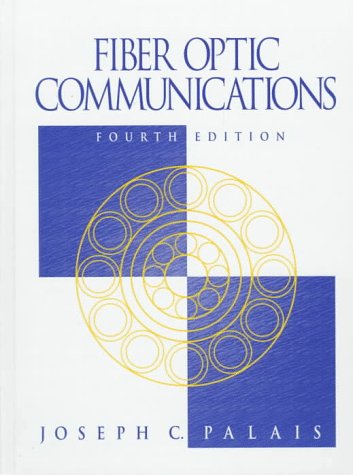
[N254.Ebook] Download Ebook Fiber Optic Communications (4th Edition), by Joseph C. Palais

Download Ebook Fiber Optic Communications (4th Edition), by Joseph C. Palais

Sooner you get the book Fiber Optic Communications (4th Edition), By Joseph C. Palais, sooner you can delight in reading guide. It will certainly be your count on keep downloading guide Fiber Optic Communications (4th Edition), By Joseph C. Palais in provided web link. In this means, you can truly decide that is offered to obtain your personal publication on-line. Below, be the initial to obtain the e-book qualified Fiber Optic Communications (4th Edition), By Joseph C. Palais and also be the very first to understand how the writer implies the message and understanding for you.

Fiber Optic Communications (4th Edition), by Joseph C. Palais

Fiber Optic Communications (4th Edition), by Joseph C. Palais


Fiber Optic Communications (4th Edition), by Joseph C. Palais

Download Ebook Fiber Optic Communications (4th Edition), by Joseph C. Palais

Fiber Optic Communications (4th Edition), By Joseph C. Palais. Eventually, you will certainly find a new experience and also knowledge by investing even more cash. Yet when? Do you assume that you should get those all demands when having significantly cash? Why do not you try to obtain something straightforward in the beginning? That's something that will lead you to recognize more about the globe, experience, some locations, past history, home entertainment, and a lot more? It is your personal time to proceed checking out habit. One of guides you can delight in now is Fiber Optic Communications (4th Edition), By Joseph C. Palais right here.

The reason of why you can get as well as get this Fiber Optic Communications (4th Edition), By Joseph C. Palais sooner is that this is guide in soft data type. You could review guides Fiber Optic Communications (4th Edition), By Joseph C. Palais any place you really want also you remain in the bus, office, residence, and other locations. However, you may not need to relocate or bring the book Fiber Optic Communications (4th Edition), By Joseph C. Palais print wherever you go. So, you will not have bigger bag to lug. This is why your option to make far better principle of reading Fiber Optic Communications (4th Edition), By Joseph C. Palais is actually useful from this instance.

Knowing the means the best ways to get this book Fiber Optic Communications (4th Edition), By Joseph C. Palais is also valuable. You have actually remained in best site to begin getting this information. Obtain the Fiber Optic Communications (4th Edition), By Joseph C. Palais web link that we supply right here and also see the link. You could order guide Fiber Optic Communications (4th Edition), By Joseph C. Palais or get it as soon as feasible. You could rapidly download this Fiber Optic Communications (4th Edition), By Joseph C. Palais after obtaining deal. So, when you need guide rapidly, you could directly get it. It's so easy therefore fats, right? You must choose to by doing this.

Simply attach your tool computer or gizmo to the net attaching. Obtain the modern-day innovation to make your downloading and install Fiber Optic Communications (4th Edition), By Joseph C. Palais completed. Also you do not wish to review, you can directly close guide soft documents and open Fiber Optic Communications (4th Edition), By Joseph C. Palais it later. You could likewise effortlessly obtain the book all over, because Fiber Optic Communications (4th Edition), By Joseph C. Palais it remains in your gadget. Or when being in the office, this Fiber Optic Communications (4th Edition), By Joseph C. Palais is likewise recommended to read in your computer tool.

Fiber Optic Communications (4th Edition), by Joseph C. Palais

Provides a comprehensive and in-depth introduction to the basics of communicating with optical fiber transmission lines, requiring only a minimal background in electronics and mathematics. Covers essential topics, including system design, operating principles, characteristics, and applications of components that comprise fiber-optic systems. The book contains numerous illustrations and worked examples and provides a periodical listing at the end of the book, including 69 new books. The fourth edition of Fiber Optic Communications has been revised to include the latest developments in fiber optics as well as coverage of a variety of new topics. It also presents expanded discussions of many additional topics. A valuable reference book on fiber optics communications for professionals in a variety of jobs, including engineers, fiber design engineers, electrical engineers, and electronic technicians, among others.

  • Sales Rank: #2657713 in Books
  • Brand: Prentice Hall
  • Published on: 1998-01-07
  • Original language: English
  • Number of items: 1
  • Dimensions: 9.50" h x .75" w x 7.13" l, 1.49 pounds
  • Binding: Hardcover
  • 342 pages
Features
  • Great product!

From the Back Cover
Provides a comprehensive and in-depth introduction to the basics of communicating with optical fiber transmission lines, requiring only a minimal background in electronics and mathematics. Covers essential topics, including system design, operating principles, characteristics, and applications of components that comprise fiber-optic systems. The book contains numerous illustrations and worked examples and provides a periodical listing at the end of the book, including 69 new books. The fourth edition of Fiber Optic Communications has been revised to include the latest developments in fiber optics as well as coverage of a variety of new topics. It also presents expanded discussions of many additional topics. A valuable reference book on fiber optics communications for professionals in a variety of jobs, including engineers, fiber design engineers, electrical engineers, and electronic technicians, among others.

Excerpt. © Reprinted by permission. All rights reserved.

Fiber optic communications developed very quickly after the first low-loss fibers were produced in 1970. Operational fiber systems are now common, and new installations and applications appear continually. Communication by fibers has taken over many of the functions previously performed by copper-based systems and extended them significantly. Fibers have become an enabling technology in the information society in which we live. They work together with the remaining copper applications and the growing wireless infrastructure to meet our expanding communications needs.

Fiber technology has matured sufficiently so that many books have been written on the subject. Some of these books are quite detailed in terms of theoretical and mathematical content, and the beginner could find the level difficult.

This text is intended to be less difficult, while still bringing to the reader the information necessary to understand the design, operation, and capabilities of fiber systems. Important theoretical and mathematical results are given without accompanying lengthy proofs. However, results are explained in physical terms when possible and appropriate, and extensive tables and figures are used to make those results readily usable. To provide a realistic view, numerical values are given for the ranges of typical device parameters.

When the first edition of this book appeared in 1984, fibers had already crisscrossed much of the United States and many other countries to deliver telephone messages between the major exchanges. By 1988, when the second edition was published, the land-based long-distance fiber telephone network was nearly complete, and submarine fiber telephone cables were being installed beneath the major oceans. In addition, fiber optic local-area networks (LANs) were in development. When the third edition went to press in 1992, over 10 million kilometers of fiber had been installed worldwide, undersea cables were being constructed, and installation of fiber LANs was increasing. By 1998, when the fourth edition was published, numerous submarine fiber cables covering the Atlantic and Pacific oceans and many smaller seas were operational. In addition, numerous tests had been completed for bringing fiber to all homes, holding out the promise for expanded services to the individual subscriber. With this fifth edition, we note several new developments. The demand for more transmission bandwidth (particularly for Internet and business applications) has required design of fiber systems carrying information at terabit-per-second rates over great distances. Metropolitan area networks (MANS) have become significant parts of the fiber industry. Bringing fiber connections to the home is still a goal, but an elusive one. Economic considerations have slowed progress in this direction.

It is the insatiable demand for greater bandwidth that makes this fifth edition necessary. The fundamentals have not changed, but new technological advances and improvements have emerged to satisfy this demand. I have attempted to work these new ideas into the previous edition with as little disruption as possible.

This is an introductory book. No background in fiber optics or in optic communications is assumed. Only the simplest concepts from algebra and trigonometry are invoked in explaining the characteristics of fiber systems. Appropriate background material on optics, electronics, and communications is introduced in the text as needed.

This book was originally based on a set of notes I developed and used for numerous short courses on fiber optic communications. Participants in these courses had training ranging from two years of technical school through the Ph.D. level. Jobs varied from designer to board chairman. Attendees included personnel from industry, government, and academia. Individual backgrounds were in chemistry, physics, and many areas of engineering. In addition to the short course presentatior3.s, I have taught this material to over 1,500 electrical engineering students at the senior and first-yeargraduate level. The course has been taught over television for more than 20 years. In the last few years it has also been available as an Internet-delivered class.

The professionals benefiting from this book include practicing design engineers concerned with the selection and application of components and with the design and evaluation of systems. Knowledge of the entire system is useful for the device designer as well. Others involved in fiber optics, such as high-level engineering-decision makers, project managers, technicians, marketing and sales personnel, and teachers, can also obtain valuable information from the material presented.

The organization of the book is as follows. Block diagrams of entire fiber optic systems are presented at the outset. This identifies the components of fiber systems, providing motivation for their individual study in succeeding chapters. Chapters 2 and 3 contain a review of important results from the fields of optics and wave travel. This basic information is needed for an understanding of fiber optic devices and systems. Chapter 4, on integrated optics, introduces the technology of combining optic components onto a single substrate. The integrated optic waveguide provides an excellent, simplified model for propagation of light in a fiber. Chapters 5-9 present the main devices encountered in a fiber optic system. These are the fiber, the light source, the light detector, the couplers, and the distribution networks. System considerations appear in Chapters 10-12, where modulation formats, the effects of noise on message quality, and system design are covered. The last chapter includes examples of operational systems. In that chapter, the design information developed throughout the book is applied to realistic problems.

I expect the reader who has mastered this material to be able to design and specify systems and to choose and evaluate such system components as fibers, light sources, detectors, and couplers. Commercially available subsystems, such as complete transmitters and receivers, will also be amenable to evaluation by the techniques presented in this book.

This new and fully revised edition of Fiber Optic Communications incorporates significant advances made in the fiber industry since publication of the fourth edition. Because the fundamentals of the technology have remained the same, the number of changes is moderate. Nonetheless, the changes and additions are significant. Added or expanded topics include the following: Raman amplifiers, erbium-doped waveguide amplifiers, arrayed waveguide gratings, electroabsorption modulators, optical microelectro-mechanical (MEMs) components, dispersion compensation, tunable light sources, tunable filters, optical time-division multiplexing, dense and coarse wavelength-division multiplexing, increased utilization of the optical spectrum, and emphasis on external modulation. A new table showing the current spectral band classification scheme has been added. Small-form-factor connectors and nonadhesive splices are described. In addition, the discussions in a number of sections were modified to improve the clarity of the presentation.

Because numerous colleges adopted the initial text for an undergraduate course in fiber optics, a homework problem set was inserted in the second edition. New problems have been added, and several of the old ones have been updated for this new edition, making this text's use in the classroom even more desirable. Some problems are merely "plug-in"-type questions, intended to give the student practice and confidence in understanding of the material presented. Other problems take more thought and might even require finding and reviewing material from other sources. Answers to most problems appear at the end of the book, and a new solutions manual is available for instructors.

Many new references have been added. The bibliography and periodicals listing at the end of the text provides a resource for further study. The bibliography includes both older "classic" fiber optics presentations and several newer ones that have appeared since the last edition of this textbook.

I find that the first seven chapters can be covered in a one-semester course. This introduces all the major system components to the students, allowing those who have mastered the material to enter productively into the fiber industry. The last five chapters, on more advanced topics, can be covered in a second term. To simplify the mathematics and reach a wider audience, many of the results presented in the text are not fully derived. Instructors of well-prepared students, such as seniors in electrical engineering programs, may wish to fill in the derivations to deepen student understanding.

FIBER OPTIC SOFTWARE

All technical workers and students have access to personal computers and the Internet. Because of this, many groups have developed software to illustrate fiber-related phenomena and to aid analysis and design. Several such programs are available through my home page (www.fulton.asu.edu/~palais). Some of these are available on CDs for instructors adopting the textbook. In addition, PowerPoint slides covering much of the textbook material are available on CDs to assist lecturers.

ONLINE COURSE AVAILABILITY

A two-semester course covering the material in the textbook is available online (and on CDs or DVDs) for university credit, for continuing education credit, or for self study. The online version contains lectures by the author, demonstrations, homework, and exams. Contact the author for information (joseph.palais@asu.edu).

JOSEPH C. PALMS
Arizona State University

Most helpful customer reviews

1 of 1 people found the following review helpful.
it's a pretty good book
By Omar A.
This is a very thorough book, it has a large number of examples, problems, and tables with everything you might need. It is logically structured and well written. However, it completely skimps on the math. Almost no derivations are shown in any of the chapters, formulas are just pulled out of nowhere.

Overall, it's a pretty good book. But if you're interested in knowing where things come from, buy something else. I'd recommend it for the not-so-mathematically inclined electrical engineering junior/senior.

2 of 2 people found the following review helpful.
Good for learning about fiber optic technology
By meowfast
I was looking for a book on fiber optic technology that had a lot of practical info and wasn't too technology in the "text book" sense.
This book fit the bill, it covers the technology without boring the hell out you with derivations of equations and semiconductor physics.
I would recommend this book.

0 of 0 people found the following review helpful.
Quick Study onf Fiber Optics
By Jeff Petermann
I have read many books looking for quick information regarding fiber optic systems and this book is by far better than any others in terms of giving you the "need to know" basics and principles. I like how clearly the background information on optical is presented. Some other reviews have aptly pointed out: 1) If you are a fiber-optics professional and want in depth treatment of specific issues, you may not find it here. However, if you are like most engineers and need to go from a 0 to 65% expert quickly for making decisions, this book is EXCELLENT. Better than others by far in terms of clarity! 2) The background info on optical does assume you have had some basic physics including in order to breeze through it. It is still a good starting point even if you haven't. I actually understood some things better after reading this book versus what I remembered from EM/physics courses. A great book.

See all 12 customer reviews...

Fiber Optic Communications (4th Edition), by Joseph C. Palais PDF
Fiber Optic Communications (4th Edition), by Joseph C. Palais EPub
Fiber Optic Communications (4th Edition), by Joseph C. Palais Doc
Fiber Optic Communications (4th Edition), by Joseph C. Palais iBooks
Fiber Optic Communications (4th Edition), by Joseph C. Palais rtf
Fiber Optic Communications (4th Edition), by Joseph C. Palais Mobipocket
Fiber Optic Communications (4th Edition), by Joseph C. Palais Kindle

Fiber Optic Communications (4th Edition), by Joseph C. Palais PDF

Fiber Optic Communications (4th Edition), by Joseph C. Palais PDF

Fiber Optic Communications (4th Edition), by Joseph C. Palais PDF

Monday, November 17, 2014

[X691.Ebook] Free PDF New Concise World Atlas, by Oxford University Press

Free PDF New Concise World Atlas, by Oxford University Press

Now, how do you recognize where to get this publication New Concise World Atlas, By Oxford University Press Never mind, now you could not visit the book establishment under the bright sunlight or evening to look the publication New Concise World Atlas, By Oxford University Press We here consistently aid you to discover hundreds kinds of e-book. Among them is this e-book entitled New Concise World Atlas, By Oxford University Press You may go to the link web page provided in this collection and after that go for downloading and install. It will not take more times. Merely link to your net accessibility and also you can access the book New Concise World Atlas, By Oxford University Press on-line. Certainly, after downloading and install New Concise World Atlas, By Oxford University Press, you could not print it.

New Concise World Atlas, by Oxford University Press

New Concise World Atlas, by Oxford University Press


New Concise World Atlas, by Oxford University Press

Free PDF New Concise World Atlas, by Oxford University Press

Suggestion in picking the very best book New Concise World Atlas, By Oxford University Press to read this day can be gotten by reading this resource. You can find the best book New Concise World Atlas, By Oxford University Press that is offered in this world. Not only had actually the books published from this nation, however also the other nations. And now, we suppose you to review New Concise World Atlas, By Oxford University Press as one of the reading materials. This is only one of the most effective books to collect in this website. Look at the resource as well as look the books New Concise World Atlas, By Oxford University Press You could locate lots of titles of guides offered.

If you ally need such a referred New Concise World Atlas, By Oxford University Press publication that will certainly give you value, obtain the very best vendor from us currently from numerous prominent publishers. If you want to entertaining publications, several novels, story, jokes, and a lot more fictions collections are additionally released, from best seller to the most current launched. You may not be confused to take pleasure in all book collections New Concise World Atlas, By Oxford University Press that we will offer. It is not concerning the rates. It's about exactly what you need now. This New Concise World Atlas, By Oxford University Press, as one of the best vendors right here will certainly be among the appropriate selections to check out.

Finding the appropriate New Concise World Atlas, By Oxford University Press book as the appropriate requirement is sort of good lucks to have. To start your day or to finish your day during the night, this New Concise World Atlas, By Oxford University Press will appertain sufficient. You can merely hunt for the tile here and also you will certainly obtain guide New Concise World Atlas, By Oxford University Press referred. It will not bother you to reduce your useful time to go for buying book in store. This way, you will also invest cash to pay for transport and various other time invested.

By downloading and install the on-line New Concise World Atlas, By Oxford University Press publication right here, you will certainly obtain some benefits not to choose the book store. Merely hook up to the net and begin to download and install the web page link we share. Currently, your New Concise World Atlas, By Oxford University Press is ready to appreciate reading. This is your time and also your tranquility to obtain all that you desire from this publication New Concise World Atlas, By Oxford University Press

New Concise World Atlas, by Oxford University Press

With hundreds of dramatic, full-color, large-format maps produced by Europe's finest team of cartographers, the fifth edition of the New Concise World Atlas solidifies Oxford's position as the only publisher of regularly updated atlases at every desirable size and price.

Containing over 100 pages of the most up-to-date topographic and political maps, the New Concise World Atlas also features a new front section of satellite imagery to replace the old "Earth in Space" section, as well as new detailed maps of the ocean seafloors. In addition to this new front section, there are 16 extra pages of world maps for this new edition covering areas such as Kazakhstan, Central Asia, Egypt, Morocco, Algeria, Tunisia, Peru, and Brazil.

Recent changes to the world's geography are thoroughly captured in this edition; fully updated tables and world statistics provide data on climate, population, area, and physical dimensions. Finally, an index with over 58,000 items make searching for lesser-known locales quick and easy.

Truly international in scope, created with meticulous care, and reflecting the very latest political developments and census information, Oxford's New Concise World Atlas, Fifth Edition achieves the highest standard among international map resources. This engaging and affordable resource is second to none in the superb quality of its maps, the breadth of its coverage, and its easy-to-use convenience.

  • Sales Rank: #58018 in Books
  • Published on: 2015-11-01
  • Original language: English
  • Number of items: 1
  • Dimensions: 10.10" h x 1.10" w x 13.30" l, 4.45 pounds
  • Binding: Hardcover
  • 224 pages

Review

"Outstanding" -Library Journal starred review


"It's a book of maps! The pages are thick, shiny and filled with useful and clear map information. It's a handy dandy size. It contains everything you need for casual atlas study or reference."--Wired


"Excellent" -Choice


Most helpful customer reviews

6 of 7 people found the following review helpful.
A great value!!!
By Dee Spencer
This is a really wonderful Atlas. I would have expected to pay a great deal more for a volume of this quality. I was a Navy Quartermaster and a lot of our charts were not of this good quality. What a bargain.

7 of 10 people found the following review helpful.
Although glossy and pretty, this Atlas might have been published in the ...
By Myrna Minkoff
Although glossy and pretty, this Atlas might have been published in the 1950s...nothing about the style and choices has been updated from a large Atlas I owned as a child. I am not complaining about the data and the map details, I have no doubt that they are current. I object to the editorial choices, which seem ridiculous in the internet age. Sure, if you have the internet, you probably don't need an atlas. But about 100 percent of Amazon customers have some access to the internet. IMO, a "new concise" Atlas should not bother including every small town in the world. Nor should it include roads except in remote places. I want a handy, big-picture reference especially pertaining to areas of the world that are frequently in the news like the Middle East, which is poorly covered. The area of the Suez Canal is tiny, for example. Everywhere, the maps are crammed full of names of minor places and roads such that the big geographic and political features are obscured. There is only one map that shows the entire Black Sea and that is a map that also shows all of Russia so the Black Sea is about one inch from East to West. If you want to know the exact location of the Ukranian village of your ancestors, this is something to save for the internet. And, especially, the roads to get you there are not needed on this map, where they could not possibly be adequate. What I want is to get a big look of the Black Sea within its political context of neighbors and geography to help me make sense of the news and history. I don't want to find some small town and how to get there.

I concede that the design of a reference work like this is determined by a large number of choices and judgments and nothing will satisfy everyone. But generally I think that publishers are misguided in thinking everybody always wants a roadmap. Totally unsatisfying to me, and I am returning it.

1 of 1 people found the following review helpful.
Nice to hold a real atlas in your hand instead ...
By garden girl
Nice to hold a real atlas in your hand instead of using the computer. Place names are in the local language.

See all 17 customer reviews...

New Concise World Atlas, by Oxford University Press PDF
New Concise World Atlas, by Oxford University Press EPub
New Concise World Atlas, by Oxford University Press Doc
New Concise World Atlas, by Oxford University Press iBooks
New Concise World Atlas, by Oxford University Press rtf
New Concise World Atlas, by Oxford University Press Mobipocket
New Concise World Atlas, by Oxford University Press Kindle

New Concise World Atlas, by Oxford University Press PDF

New Concise World Atlas, by Oxford University Press PDF

New Concise World Atlas, by Oxford University Press PDF